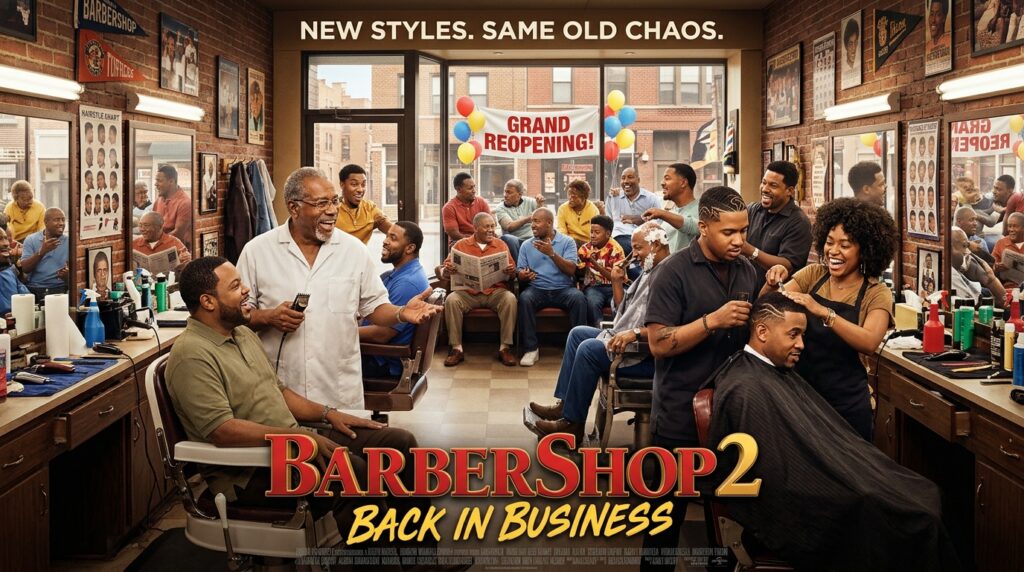

Barbershop 2: Back in Business is a comedy film that brings audiences back into the lively world of Calvin’s Barbershop, where conversations are just as entertaining as the haircuts. Released in 2004, this sequel continues the story introduced in the original Barbershop movie, offering another enjoyable look at friendship, neighborhood culture, family responsibilities, and the challenges of running a small business.
With its memorable characters, humorous conversations, and relatable situations, the movie explores something much bigger than the daily operations of a neighborhood barbershop. It highlights the importance of community connections, independent businesses, cultural identity, and the relationships that develop when people regularly share the same space.
Starring Ice Cube, Cedric the Entertainer, and a talented supporting cast, Barbershop 2: Back in Business combines comedy with meaningful observations about everyday life. Its story reminds viewers that a local business can become an important part of a neighborhood’s identity.
Whether someone is discovering the film for the first time or revisiting it after enjoying the original, this sequel offers plenty of entertainment and thoughtful moments.
What Is Barbershop 2: Back in Business About?
Barbershop 2: Back in Business is the second installment in the popular Barbershop film series. Directed by Kevin Rodney Sullivan, the movie follows Calvin Palmer Jr. as he continues operating his family barbershop in Chicago.
Calvin’s Barbershop is more than a place where customers come for haircuts. It is a neighborhood gathering place where friends exchange opinions, customers discuss everyday issues, and different personalities create an entertaining atmosphere.
However, Calvin faces a significant challenge when a modern, upscale barbershop threatens his traditional business. The competition puts pressure on him to reconsider his approach and decide what kind of future he wants for the establishment.
The central conflict explores the difficulties independent businesses experience when larger competitors enter their neighborhoods. It also examines the tension between modernization and tradition.
While Calvin considers the future of his business, the barbers and customers continue bringing their own personalities, opinions, and experiences into the shop. Their conversations provide much of the film’s humor and give the story its distinctive character.
The Story Behind Calvin’s Barbershop
At the center of the movie is Calvin Palmer Jr., played by Ice Cube. As the owner of the barbershop, Calvin carries the responsibility of protecting a family business that has become an important neighborhood institution.
His position is not always easy. Running a small business involves financial decisions, customer relationships, employee management, and the constant need to adapt to changing circumstances.
Calvin must consider whether his traditional approach is enough to keep the business successful. He also has to think about what the barbershop means to the people who depend on it.
The arrival of a competing establishment introduces a new level of pressure. Instead of simply focusing on daily operations, Calvin must consider the long-term survival of his business.
This situation makes the film relatable to entrepreneurs and small-business owners. Competition can create uncertainty, but it can also encourage business owners to recognize their strengths and develop better strategies.
Calvin’s journey demonstrates that protecting a business is not always about making dramatic changes. Sometimes, understanding the value of an established reputation and maintaining strong customer relationships can make a significant difference.
Barbershop 2: Back in Business Cast and Characters
One of the strongest elements of the movie is its ensemble cast. The characters have different personalities, opinions, and experiences, creating an entertaining environment that feels lively and authentic.
Some of the important cast members include:
Ice Cube as Calvin Palmer Jr.
Ice Cube returns as Calvin, the central character and owner of the barbershop. His performance balances humor with the responsibilities of managing a family business. Calvin represents the determination of an entrepreneur who wants to protect something meaningful while preparing for the future.
Cedric the Entertainer as Eddie
Cedric the Entertainer returns as Eddie, one of the movie’s most recognizable personalities. His character contributes plenty of humor through outspoken opinions, amusing observations, and conversations with the other barbers.
Eve as Terri Jones
Eve reprises her role as Terri, bringing confidence and personality to the barbershop environment. Her character adds another perspective to the workplace relationships and conversations.
Anthony Anderson as J.D.
Anthony Anderson returns as J.D., providing additional comedy and memorable interactions with the other characters. His performance helps maintain the energetic atmosphere that makes the franchise enjoyable.
Sean Patrick Thomas as Jimmy James
Jimmy brings his own personality and perspective to the workplace. His character contributes to the everyday disagreements and discussions that make the shop feel like a real community.
Queen Latifah as Gina Norris
Queen Latifah appears as Gina, a central character in the film’s expanded barbershop world. Her presence also connects the movie to the broader Barbershop franchise.
Together, these performers create an ensemble that gives the film its recognizable personality.
Why Barbershop 2 Is More Than Just a Comedy
Although the movie is primarily an entertaining comedy, it explores several meaningful subjects.
Its story touches on economic competition, neighborhood identity, personal responsibility, workplace relationships, and the importance of maintaining cultural traditions.
The comedy makes these subjects accessible without turning the film into a serious business drama.
1. The Importance of Small Businesses
Independent businesses often provide more than products and services. They create employment opportunities, support local communities, and help neighborhoods maintain their individual character.
Calvin’s Barbershop represents this idea throughout the movie.
Customers are familiar with the people who work there, and the employees understand the importance of maintaining relationships with regular visitors. The business has developed a reputation through personal connections and years of service.
The film shows why independent businesses deserve attention and support, particularly when competing against larger companies with more resources.
2. Competition and Business Challenges
Competition is an important part of the storyline.
When another barbershop enters the picture, Calvin must think carefully about his business strategy. He faces questions about pricing, customer loyalty, presentation, and the changing expectations of consumers.
These challenges reflect real situations experienced by small-business owners.
A business that has operated successfully for years cannot always depend on its previous reputation. Customer preferences change, new competitors emerge, and technology influences how people discover local services.
The movie encourages viewers to consider how traditional businesses can remain relevant without losing their identity.
3. Friendship and Workplace Relationships
The barbershop is also a place where friendships develop.
The employees share jokes, disagree about different subjects, and support one another through personal and professional challenges.
These interactions create a familiar workplace atmosphere.
The movie demonstrates that a positive working environment depends on more than professional responsibilities. Communication, respect, humor, and understanding also contribute to strong relationships.
4. Cultural Identity and Neighborhood Traditions
Barbershops have long played an important role in many communities.
They provide spaces where people can discuss local events, exchange ideas, share personal experiences, and connect with others.
In the movie, Calvin’s establishment represents this tradition.
The conversations inside the shop reveal different perspectives on culture, relationships, entertainment, and everyday social issues.
This cultural dimension gives the film an identity that goes beyond its main business storyline.
The Difference Between Traditional and Modern Barbershops
One of the interesting themes in Barbershop 2: Back in Business is the contrast between traditional neighborhood establishments and newer, more modern competitors.
The movie presents two different approaches to running a barbershop.
A traditional barbershop often builds its reputation through personal service, familiar surroundings, and long-standing customer relationships. Customers return because they appreciate the atmosphere and trust the people providing their haircuts.
A modern establishment may focus on updated interiors, contemporary services, new equipment, and a different customer experience.
Neither approach is automatically better. Each has its own advantages, depending on customer expectations and business goals.
The film uses this contrast to explore an important question: Can a traditional business evolve without losing the qualities that made it successful?
For independent business owners, the answer often involves finding a balance between innovation and authenticity.
The Humor That Makes the Movie Memorable
Comedy is one of the biggest reasons audiences enjoy the Barbershop franchise.
The humor comes from conversations, character personalities, disagreements, and unexpected observations.
Rather than relying entirely on elaborate situations, the movie finds comedy in ordinary interactions.
The barbers discuss different topics, challenge one another’s opinions, and create amusing situations through their everyday conversations.
Cedric the Entertainer’s performance as Eddie is especially important to the film’s comedic atmosphere. His character frequently delivers humorous commentary that adds personality to the scenes.
The supporting cast also contributes to the movie’s energy.
The result is a comedy that feels conversational and character-driven. Viewers can enjoy the humor while becoming familiar with the relationships between the people who work in and visit the shop.
The Importance of Community in Barbershop 2
Community is one of the most important themes throughout the film.
Calvin’s business has become a familiar part of the neighborhood. People visit not only because they need haircuts but also because they appreciate the environment and relationships associated with the establishment.
This reflects the real role that neighborhood barbershops can play in everyday life.
For many customers, visiting a familiar barber is part of a regular routine. They appreciate receiving consistent service from someone who understands their preferences.
Over time, these relationships can develop into genuine friendships.
A neighborhood barbershop can also become a place where different generations interact. Older customers share experiences, younger visitors introduce new perspectives, and employees develop connections with people from different backgrounds.
The film celebrates this sense of belonging.
It suggests that successful businesses can become meaningful community institutions when they consistently provide value beyond their primary services.
Business Lessons Viewers Can Learn From the Movie
Although Barbershop 2 is not a business training film, it offers several lessons that entrepreneurs can apply to real-world situations.
Understand Your Customers
Customer loyalty is built through positive experiences.
Business owners should understand what their customers appreciate, identify their needs, and provide reliable service.
A neighborhood barbershop can maintain a strong reputation by remembering customer preferences and creating a welcoming atmosphere.
Respect Your Business History
An established business often has a history that distinguishes it from competitors.
Its reputation, customer relationships, and experience can become valuable advantages.
However, respecting tradition does not mean refusing to improve.
Successful entrepreneurs understand how to preserve their strengths while making necessary changes.
Pay Attention to Competition
Competition can reveal areas where a business needs improvement.
Rather than ignoring new competitors, owners should evaluate their services, customer experiences, marketing strategies, and overall value.
This information can help businesses make smarter decisions.
Create a Strong Workplace Culture
Employees influence the way customers experience a business.
A supportive environment encourages communication, teamwork, and better service.
The relationships between Calvin and the other barbers demonstrate how workplace personalities can shape the atmosphere of an establishment.
Build Relationships Beyond Transactions
Customers are more likely to return when they feel appreciated.
Personal attention, consistency, honesty, and friendly communication can help businesses develop lasting relationships.
These principles apply to barbershops, restaurants, retail stores, and many other independent businesses.
The Cultural Influence of the Barbershop Film Franchise
The original Barbershop introduced audiences to a neighborhood environment filled with humor, lively discussions, and memorable characters.
The sequel continues that approach while expanding the story.
The franchise is notable because it treats the barbershop as a cultural gathering place rather than simply a location for grooming services.
This approach allows the films to explore everyday subjects through conversations between people with different backgrounds and opinions.
The setting also provides opportunities to examine issues affecting communities, including economic changes, neighborhood development, social expectations, and personal relationships.
By combining these subjects with comedy, the franchise creates entertainment that feels connected to recognizable experiences.
The popularity of the series also demonstrates how a relatively familiar setting can support engaging storytelling when the characters and conversations are interesting.
Is Barbershop 2: Back in Business Worth Watching?
For viewers who enjoy character-driven comedy, Barbershop 2: Back in Business is a worthwhile movie to consider.
The film offers a combination of humor, familiar personalities, and a story centered on business competition and community connections.
Fans of the original movie will appreciate seeing familiar characters return and discovering how their relationships continue to develop.
New viewers can also enjoy the sequel because its central themes are relatively easy to understand.
The movie is particularly appealing to people who enjoy:
- Comedy films with ensemble casts.
- Stories about neighborhood businesses.
- Movies featuring memorable conversations.
- Films exploring friendship and workplace relationships.
- Stories about cultural identity and community.
- American comedy movies from the early 2000s.
Its blend of entertainment and relatable themes makes it an enjoyable choice for a casual movie night.
Barbershop 2: Back in Business and Its Place in the Series
The Barbershop franchise developed into a collection of films exploring the people and relationships connected to neighborhood grooming businesses.
The original Barbershop established the characters and introduced audiences to Calvin’s business.
Barbershop 2: Back in Business continued the story by presenting new challenges and expanding the world of the characters.
The franchise later continued with Barbershop: The Next Cut, released in 2016.
Each installment explores different aspects of the barbershop environment while maintaining the importance of community and relationships.
The sequel remains an important part of the series because it develops the original story and gives audiences another opportunity to spend time with familiar characters.
Final Thoughts on Barbershop 2: Back in Business
Barbershop 2: Back in Business is an entertaining comedy that combines memorable characters, amusing conversations, and meaningful themes about independent businesses and neighborhood culture.
Through Calvin’s experiences, the film explores the challenges of maintaining a family business while facing competition and changing customer expectations.
Its strongest quality is the way it presents the barbershop as more than a commercial establishment. It is a place where friendships develop, opinions are exchanged, traditions continue, and community connections become stronger.
The performances from Ice Cube, Cedric the Entertainer, Eve, Anthony Anderson, and the supporting cast help create an energetic atmosphere that makes the story enjoyable.
Ultimately, the film offers a simple but valuable message: A successful business is not defined only by its financial performance. Its relationships, reputation, identity, and contribution to the community also matter.
For anyone interested in comedy movies, small-business stories, or the cultural importance of neighborhood barbershops, Barbershop 2: Back in Business remains an entertaining film worth revisiting.
Frequently Asked Questions (FAQs)
1. What is Barbershop 2: Back in Business about?
Barbershop 2: Back in Business follows Calvin Palmer Jr. as he faces challenges to his family-owned barbershop when a competing business threatens its position in the neighborhood. The film combines comedy with themes of friendship, business competition, and community.
2. When was Barbershop 2: Back in Business released?
The movie was released in 2004. It is the sequel to the original Barbershop, which premiered in 2002.
3. Who stars in Barbershop 2: Back in Business?
The main cast includes Ice Cube, Cedric the Entertainer, Eve, Anthony Anderson, Sean Patrick Thomas, and Queen Latifah, among other performers.
4. Who directed Barbershop 2: Back in Business?
Kevin Rodney Sullivan directed the 2004 comedy sequel.
5. Is Barbershop 2 a sequel to the original Barbershop?
Yes. It continues the story of Calvin’s Barbershop and brings back several characters from the original film.
6. What are the main themes of Barbershop 2?
The main themes include small-business ownership, competition, friendship, cultural identity, neighborhood traditions, customer relationships, and community support.
7. Is Barbershop 2 a comedy movie?
Yes. It is an American comedy film that uses character interactions, humorous conversations, and everyday situations to entertain audiences.
8. What makes Barbershop 2 different from other comedy movies?
Its distinctive setting and ensemble cast help it stand out. Instead of focusing entirely on one character, the film explores a group of people whose conversations and relationships create the story’s humor.
9. Do you need to watch the original Barbershop first?
Watching the original film is recommended because it introduces the characters and their relationships. However, the sequel can also be enjoyed independently.
10. Is Barbershop 2: Back in Business still relevant today?
Yes. Its themes of business competition, customer loyalty, neighborhood development, and community relationships remain relevant to modern audiences and independent business owners.
Explore more: The Family Business New Season: Cast, Story and Updates


